Recovery Means Access: Supporting Veterans, Accessibility, and Independence
A new initiative providing AI glasses to blind veterans is a reminder that recovery must include accessibility, dignity, and connection.
Recovery is not only about treatment.
It is also about independence. Belonging. Purpose. Safety. Connection. The ability to participate fully in daily life and in community.
For veterans, people with disabilities, people in recovery, and families impacted by addiction, trauma, mental health challenges, and isolation, those supports can be deeply connected.
That is why accessibility is not separate from recovery. It is part of recovery.
When someone can get to a meeting, read a resource, navigate a website, participate in an event, use a service, communicate their needs, or move through the world with greater confidence, they are not just accessing information. They are accessing community.
And community is one of the foundations of recovery.
Veterans Are an Essential Part of the Recovery Community
Veterans have always been an important part of the recovery movement.
Many veterans return home carrying experiences that can affect their mental health, substance use, relationships, sense of purpose, and connection to others. For some, recovery may mean healing from substance use or trauma. For others, it may mean rebuilding independence after injury, disability, grief, isolation, or major life transitions.
For many, it means all of the above.
That is why tools, services, and community supports that expand independence and connection matter so much.
When a blind or low-vision veteran can read a document, identify an object, better understand their surroundings, or move through daily life with more confidence, that is not just a technology story. It is a recovery story.
It is about dignity. Participation. Autonomy. Connection. The ability to stay engaged with the people, places, and communities that support healing.
A Timely Example: AI Glasses for Blind Veterans
This week, Meta announced a major new initiative to donate Ray-Ban Meta AI glasses to blind veterans across the United States, an estimated 130,000 people, along with training to help veterans use the technology for accessibility and independence.
The glasses can help blind and low-vision users read documents, identify objects, better understand their surroundings, and navigate daily life with greater autonomy.
Meta is partnering with nonprofit organizations serving blinded veterans to help distribute the devices and provide training. Nonprofits can apply to receive devices and training through TechSoup, with accepted organizations expected to begin receiving devices in early July.
Mobilize Recovery applauds this effort and encourages veteran-serving organizations, disability advocacy groups, recovery organizations, and community partners to help spread the word.
For blind and low-vision veterans, AI glasses are not a novelty. They can be a practical tool for independence, access, and connection.
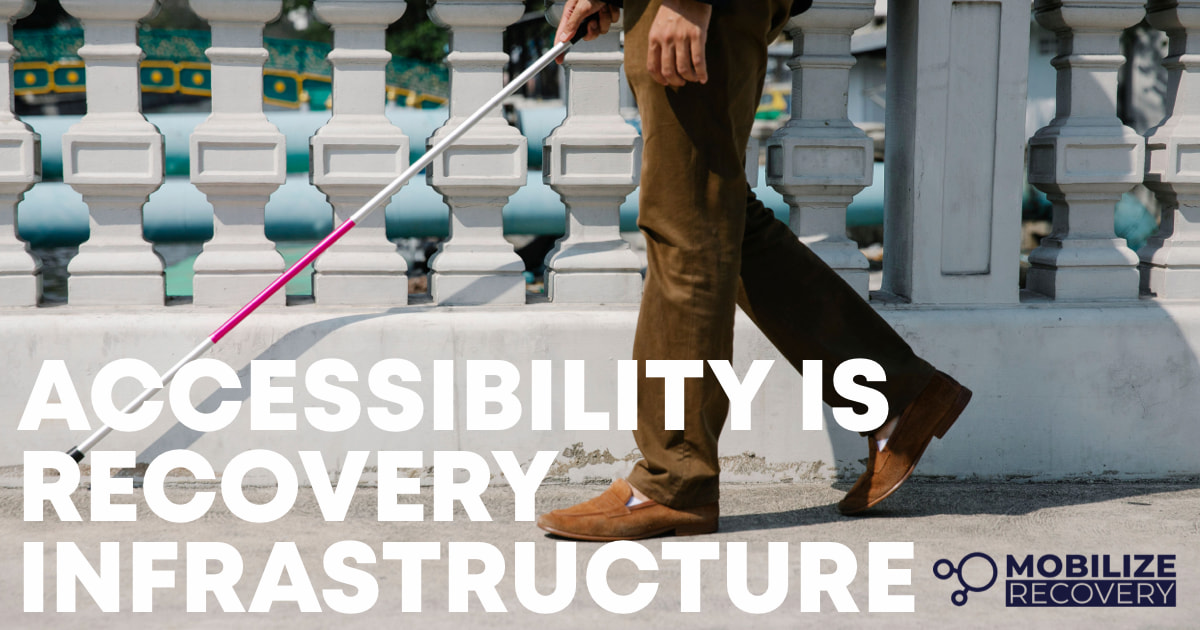
Accessibility Is Recovery Infrastructure
Recovery communities often talk about removing barriers to care. But barriers are not only financial, geographic, or clinical.
They can also be physical, sensory, digital, social, and cultural.
If someone cannot access a recovery meeting, navigate a website, read a resource, participate in an event, use a service, or feel included in a recovery space, then the promise of recovery is not reaching everyone it should.
Accessibility is not an add-on. It is part of building recovery systems that are person-driven, community-centered, and available to all.
That includes veterans. It includes people with disabilities. It includes people who are blind or low vision, Deaf or hard of hearing, neurodivergent, living with mobility disabilities, navigating chronic illness, or facing overlapping barriers related to trauma, substance use, mental health, housing, transportation, or isolation.
When communities design with accessibility in mind from the beginning, more people can participate, connect, heal, lead, and thrive.
Join Us: Understanding Recovery and Accessibility
Mobilize Recovery will continue this conversation through our upcoming free virtual workshop, Understanding Recovery and Accessibility, on Thursday, July 30 at 7pm ET / 4pm PT.
This workshop will explore why people with disabilities who need recovery services are too often left out, what needs to change, and why accessibility must be built into recovery spaces, services, events, advocacy campaigns, and community programs from the start.
Recovery is meant to be person-driven. But access determines who actually gets a chance.
This timely conversation is for recovery advocates, veteran-serving organizations, disability advocates, service providers, families, community leaders, and anyone working to build systems that do not leave people behind.
Help Spread the Word
If you know a veteran-serving organization, disability advocacy group, recovery organization, or community partner that may benefit from Meta’s AI glasses program for blind veterans, please share this opportunity with them.
Organizations that work with blind or low-vision veterans are encouraged to learn more about the program and apply through TechSoup.
Together, we can help ensure people have the tools, support, and access they need to participate fully in their communities.