Tom Farley’s Diaries
Follow along as comedian and advocate Tom Farley joins Mobilize Recovery Campus Surge.

I’ve worn a lot of hats over the years—author, speaker, advocate—but one of the most meaningful roles I hold today is as the Community Outreach Director with Recovery.com.
For those who don’t know me, I’m also the brother of the late comedian Chris Farley, whose struggles with addiction continue to inspire my own commitment to this work.
This year, I’ve had the privilege of partnering with Mobilize Recovery, an organization that’s been at the forefront of bringing recovery advocacy to communities across the country. They launched Campus Surge, a bold new initiative bringing the spirit of the “Across America Bus Tour” directly to college campuses. The goal? To shine a light on student recovery, amplify local efforts, and remind us all that healing is possible.
As we say, there are many roads to recovery so I anticipate that each stop will have its own unique feel and focus. As such, I wanted to capture how recovery looks at each of these stops. I’m excited for what I will see and who I will meet.
My hope is that through these diaries, you’ll catch a glimpse of what recovery looks like across America and why it matters so deeply for the next generation.
Here’s the first stop.

Stop One: University of Charleston
As I glanced out the airplane window, I looked down on the rolling hills of West Virginia. A beautiful sight, with endless valleys (or “hollers” as they say), tiny creeks and an occasional cluster of homes.
I was heading to the state capital in Charleston, for the first stop on Mobilize Recovery’s Campus Surge tour. To be honest, even though I have done many college talks over the years, I was fairly unfamiliar with the growth of the student recovery movement on college campuses. One of my goals when I came on board with Recovery.com was to support and help shed a light on this incredible shift in college culture.
I arrived in Charleston, WV on a Saturday, the day before the event. After checking into my hotel, overlooking the scenic Kanawha River, I started walking toward their downtown area. I was meeting another Mobilize Recovery champion to grab some pizza and talk about the event. Downtown Charleston was very active and lively, but not nearly at the same state capital-college town level that I’m used to in my hometown of Madison, WI.
There was an outside concert going on in a downtown pavilion that was surrounded by some beautiful, old buildings that once housed America’s coal industry. Now, these buildings have been repurposed with creative shops, restaurants and apartments. Even so, downtown Charleston didn’t have a real college vibe. Now, that may be because it was Labor Day Weekend, and the school itself is actually on the other side of the river. It was great to see a new town, with all its history. But I came to speak on campus, which made me even more excited for the next day’s event.

Sunday morning, I woke up and took a walk along the river. I paused in front of the beautiful West Virginia state capitol and the Governor’s residence next door. The Capitol was directly across the river from the University of Charleston. Both had great views of each other. The Campus Surge event was a few hours away, so I made my way to the campus of the University of Charleston.
I was early so I set up the Recovery.com resource table and walked around the school and surrounding neighborhood. Being the first stop on the tour I had no idea what to expect. From my research I learned that West Virginia is one of the hardest hit states of the opioid crisis. I saw glimpses of the effects of this within blocks of Charleston’s cute, vibrant downtown. I can only imagine what a closer look in those Hollers would show. Before the event was to officially start, I went around to the other resource tables and met the amazing people and groups that have been on the front lines of West Virginia’s treatment and recovery efforts.
And of course, I met the college recovery groups that are doing amazing work to redefine our interpretation of what college life looks like. As the program started, I listened to several speakers doing the hard, tireless work that has resulted in significant drops in overdose fatalities and increased treatment and prevention efforts. But their message was clear. The crisis continues, fueled by ever-increasing fentanyl and methamphetamine use.
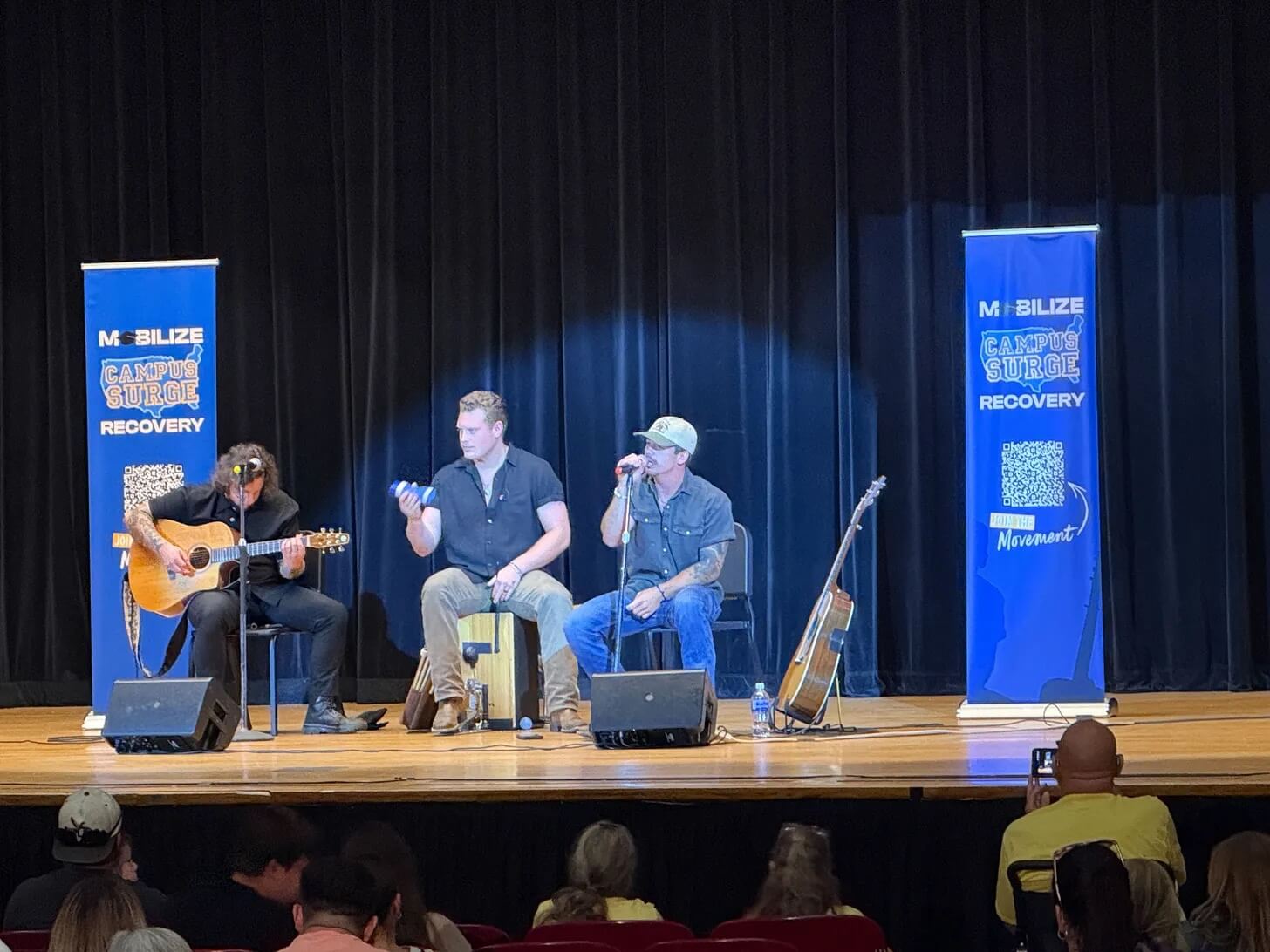
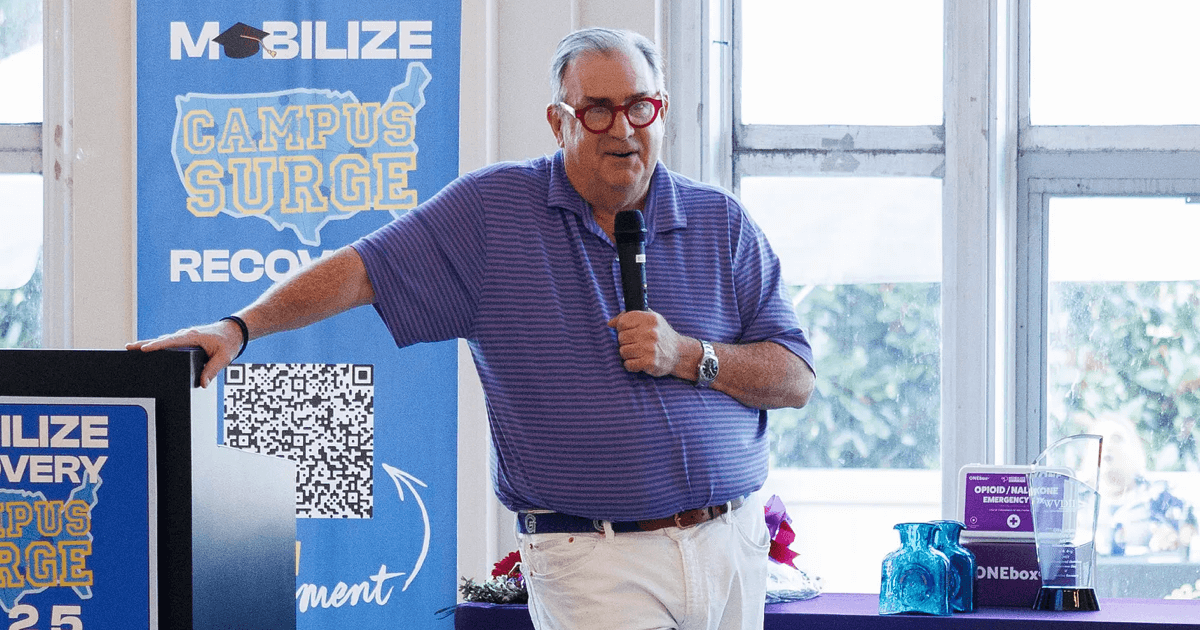
One speaker was the doctor portrayed by Michael Keaton in Dopesick. As good as Keaton’s performance was, hearing the real person tell his story was truly memorable and inspiring.
Other speakers included officials at the state and federal levels, including ONDCP (Office of National Drug Control Policy). Unlike the speeches and proclamations that I’ve heard from many policy influencers, I could actually hear hope and care and promise in their comments. That felt good. Awards were given to some truly inspiring people. I know I was moved not just by the description of their work, but in the humble way they received the awards acknowledging that work.
The look on the faces of the student recovery population that were also present told me they were moved as well. That is probably the most important part of Campus Surge. At one point there was a break in all the speaking and awarding to recognize that the event was being held on International Overdose Awareness Day. And so, after a moment of silence, butterflies were released to remember the people lost to this disease and to acknowledge the need to reduce the stigma associated with overdoses.
Oh yes, and somewhere in the midst of this wonderful event, I was asked to speak.
As with all my talks, my message is always this; we tell our stories because we cannot heal in isolation.
And that is what I wanted this group to hear, especially the college population. Every time I speak, what people are seeing is me healing. I want audiences to see me being vulnerable, honest, grateful. I related this anecdote about what I learned when looking back at my time in college.
It goes like this; so often I found myself in a room, surrounded by people, the center of attention, making everyone laugh… and yet feeling like I was in the middle of the ocean, alone in a raft. I was working so hard to be a person I thought I needed to be, who I believed the world wanted me to be. But knowing deep inside that this person I was showing the world WASN’T me.
And so, I managed that feeling in ways that were numbing in the short term and kept me in isolation in the long-term. In recovery I not only began to discover my authentic self but also learned to actually like that person. And here’s the kicker, the more I focused on finding and defining that authentic person, the more I was attracting people to me.
I was finding connection, something I always wanted (and was trying way too hard to get.)
As I finished, I wanted this beleaguered yet proud and resilient community and university to know that recovery is possible for those they care about, and not to limit that recovery. I told them that on Recovery.com anyone can find the right mental health and addiction resources they need. But most importantly, I talked about that wonderful moment when things begin to feel possible again. That is what recovery looks like.
Thank you, West Virginia. On to the next stop: Dover, NH.
This article was originally published on Substack. Read more from Tom at https://substack.com/@thetomfarley