A Full Circle Moment
Rutgers alumna inspiring the next generation of students with a caffeinated twist
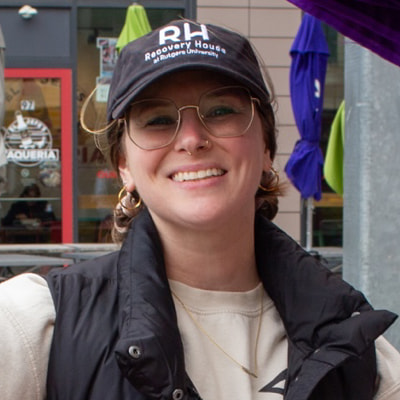
“Everything in my life has something to do with coffee. I believe in a former life I was coffee.” If you are familiar with the television show Gilmore Girls, you might recognize these lines spoken by the spunky star of the show, Lorelai Gilmore. I can’t help but relate to these words at this point in my life. Why? Well, I am a huge fan of the show to begin with. I start every day with a cup of coffee. I’ve worked at a coffee shop. My partner and I bonded over coffee when we began our relationship and I’ve had coffee dates with friends, as lots of people do nowadays.
My career has also become all about coffee. I now spend my days serving coffee to students at Rutgers University in New Brunswick, NJ. No, I don’t work at the campus Starbucks; I coordinate The Vicious Cycle campaign. The coffee I serve is free, and I am an advocate for Collegiate Recovery.
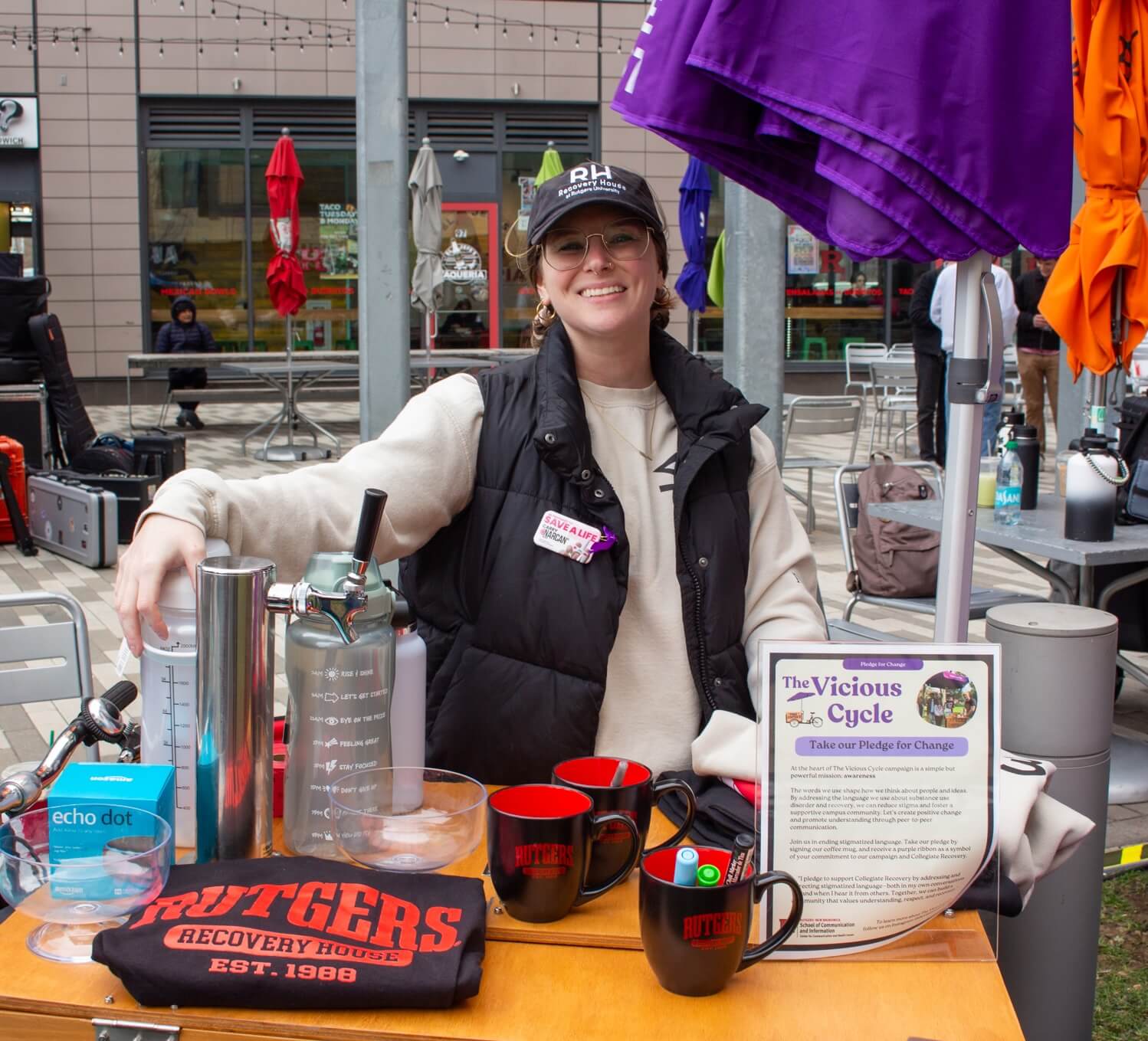
How did I end up being a part of this story about Collegiate Recovery and serving free coffee? It all starts as a student in a classroom, and that’s exactly where I am today - teaching the next generation of students. Talk about a full-circle moment. Or a cycle, perhaps?
I was once a student in Dr. Lea Stewart’s Advanced Health Communication course, gaining hands-on experience disseminating messages about dangerous drinking prevention. Today, almost nine years later, I am Dr. Stewart’s Program Coordinator, working with her at the Center for Communication and Health Issues and teaching students in her classroom how to perform outreach for The Vicious Cycle campaign and Collegiate Recovery. Over the years, due to personal experience seeing substances affect people close to me, and learning about addiction and recovery through working with Dr. Stewart and individuals like Keith Murphy, I’ve found purpose in this work. This purpose guides me every day to pass the knowledge and experiences I’ve gained on to the next generation of young minds who can use it for personal and social good. Hopefully, by the end of this story, you can understand how connecting with students in the classroom can inspire them to support Collegiate Recovery, with a little bit of coffee mixed in!
What is The Vicious Cycle?
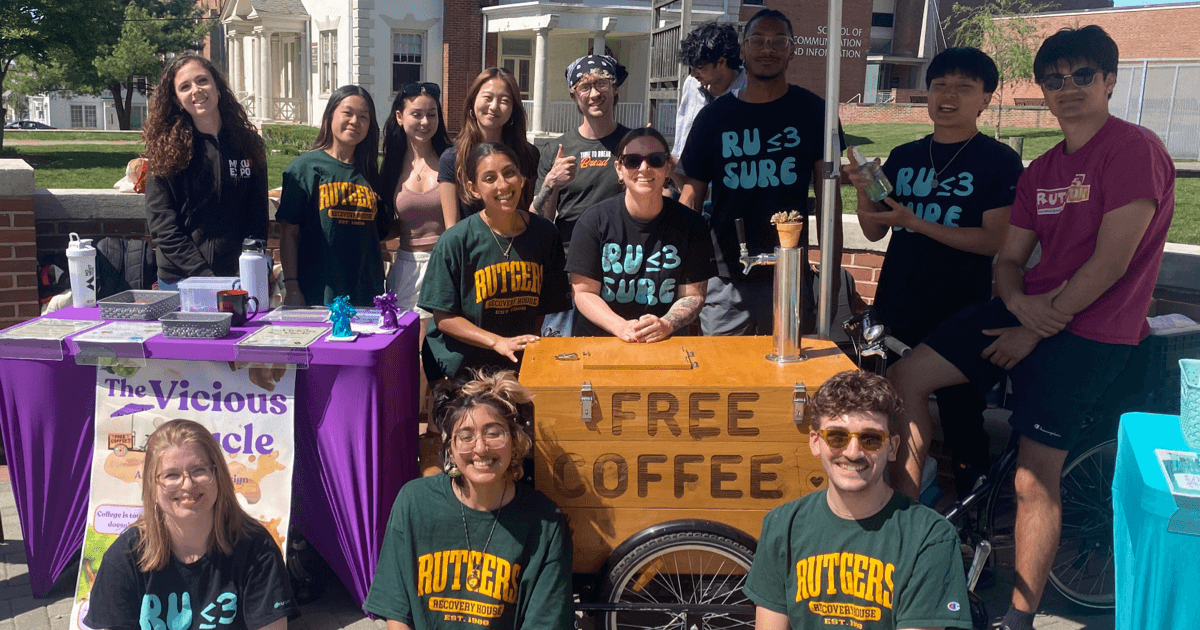
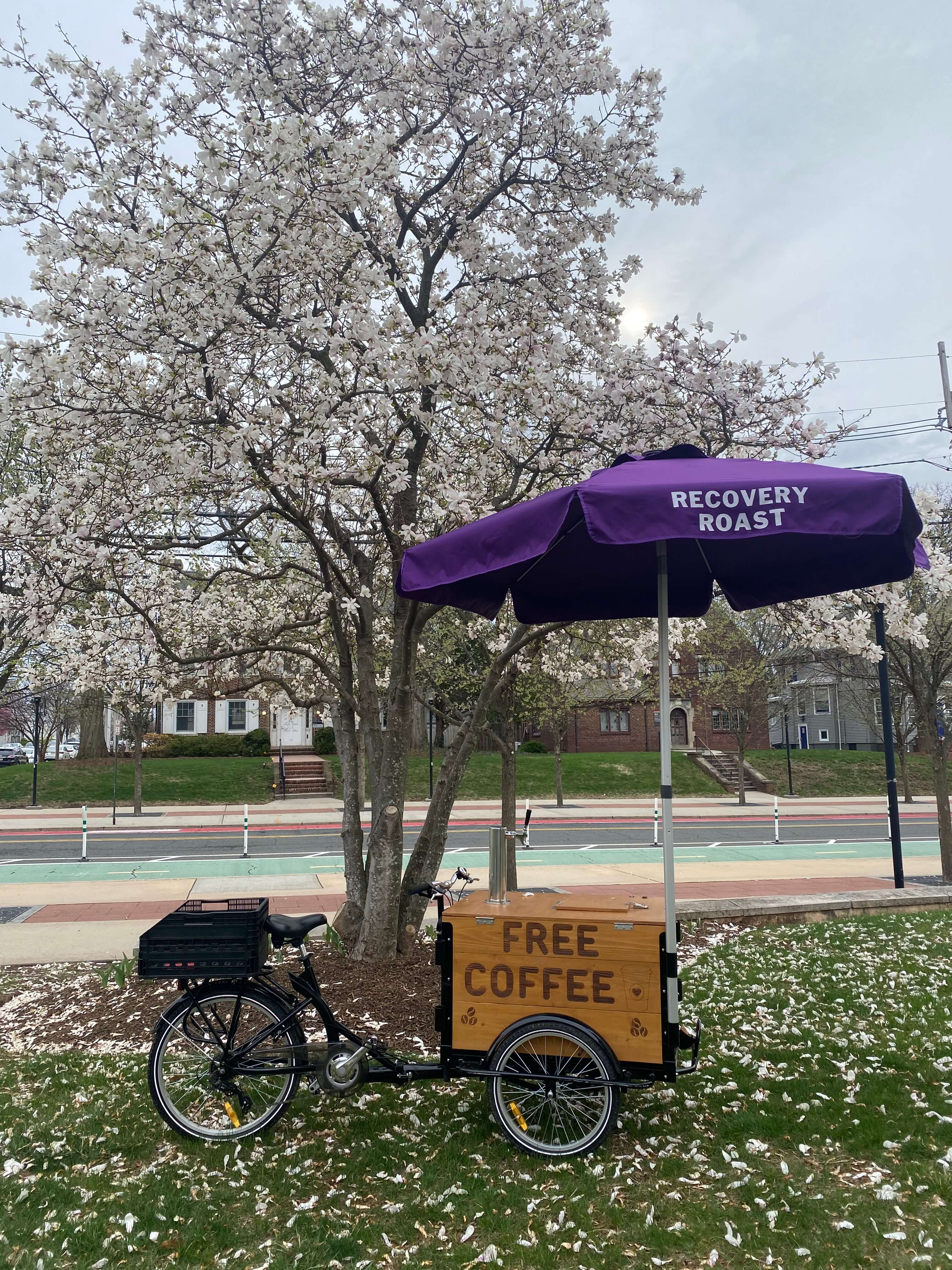
In a recovery landscape, we can recognize the vicious cycle of addiction. Here at Rutgers, it’s a coffee bike. Yes, a tricycle set up to serve coffee to the Rutgers community. We’re serving up more than coffee, though. Our coffee comes with a splash of conversation about normalizing Collegiate Recovery and educating students with purpose.
In partnership with the Center for Communication and Health Issues (CHI) and the Rutgers Alcohol and Other Drug Assistance Program (ADAP), we purchased a coffee bike, named it The Vicious Cycle, and started developing a campaign to promote Collegiate Recovery at Rutgers while handing out free coffee.
In other words, this is an on-the-go stigma-reducing and harm-reduction campaign. A “stigma-reducing machine,” as Keith Murphy, the Director of ADAP, likes to call it. By hosting pop-up events at various locations on campus and offering free coffee to students, staff, or faculty walking by, we aim to create a casual environment to:
- normalize Collegiate Recovery,
- promote the Rutgers Recovery House,
- educate students about substance use disorder and recovery,
- reduce stigma surrounding substance use disorder and recovery,
- discuss harm reduction, and
- provide Narcan education and distribution.
Our students working on the campaign have not only created welcoming conversations at our events, but they have also been hard at work creating fun and educational content for our social media pages on Instagram and TikTok (@theviciouscycle_ru).
Click to play video:
https://assets.nationbuilder.com/mobilizerecovery/pages/14871/attachments/original/1758490690/ScreenRecording_09-11-2025_13-42-47_1.mp4?1758490690
Why coffee? Coffee creates a connection, but it also helps us stand out
We gained attention quickly. How could we not, when we hand out free coffee from a cute tricycle with a wooden box and a big purple umbrella? The aesthetics are exactly what Gen Z college students are looking for. Something unique that piques their curiosity and doesn’t hurt their pockets. Emphasis on the FREE coffee. Not everyone drinks coffee, though; shout out to our matcha and tea drinkers! We have other goodies available at our events, like stickers, buttons, and coffee mugs. On top of that, our team of students always comes with the best vibes to promote excellent conversations.
Rutgers students are connecting over hobbies, social media, music, relationship drama, the state of the world, the struggles facing Gen Z, and their futures. It’s hard being a college student! They are usually too overwhelmed to have meaningful conversations about drug misuse, staying safe, the meaning of recovery, and the resources their school has to help students when it comes to alcohol and other drugs. Those topics don’t tend to be the most fun things to discuss.
Every semester, I ask my class if they have ever heard about the Rutgers Recovery House. Thankfully, at least one of the 30 students raises their hand each time. But, we’re hoping to change that. This semester, we had two hands raised. Baby steps! So, chatting with them about Collegiate Recovery in the classroom or over a cup of coffee helps make the topic more casual and promotes connection, especially when it is done peer-to-peer. But it’s still challenging. Collegiate Recovery and topics like opioid overdose and Narcan can be such misunderstood and stigmatized topics.
It’s more than just coffee - it’s about inspiring students to do the hard work
Never give an advocate access to a classroom and creative freedom with their syllabus. Because guess what? The course content will be filled with ways to teach students not only about marketing communication, but also how to be empathetic and conscious young adults when it comes to harm reduction, health communication, and substances. After many years together discussing dangerous drinking prevention, Dr. Stewart and I have spent the last two years weaving The Vicious Cycle campaign, Collegiate Recovery, and harm reduction into our syllabi. By doing this, we have inspired students to continue this work and become advocates for Collegiate Recovery by working with The Vicious Cycle campaign. Dr. Stewart inspired me as a student, and now I am paying it forward - but now it involves coffee.
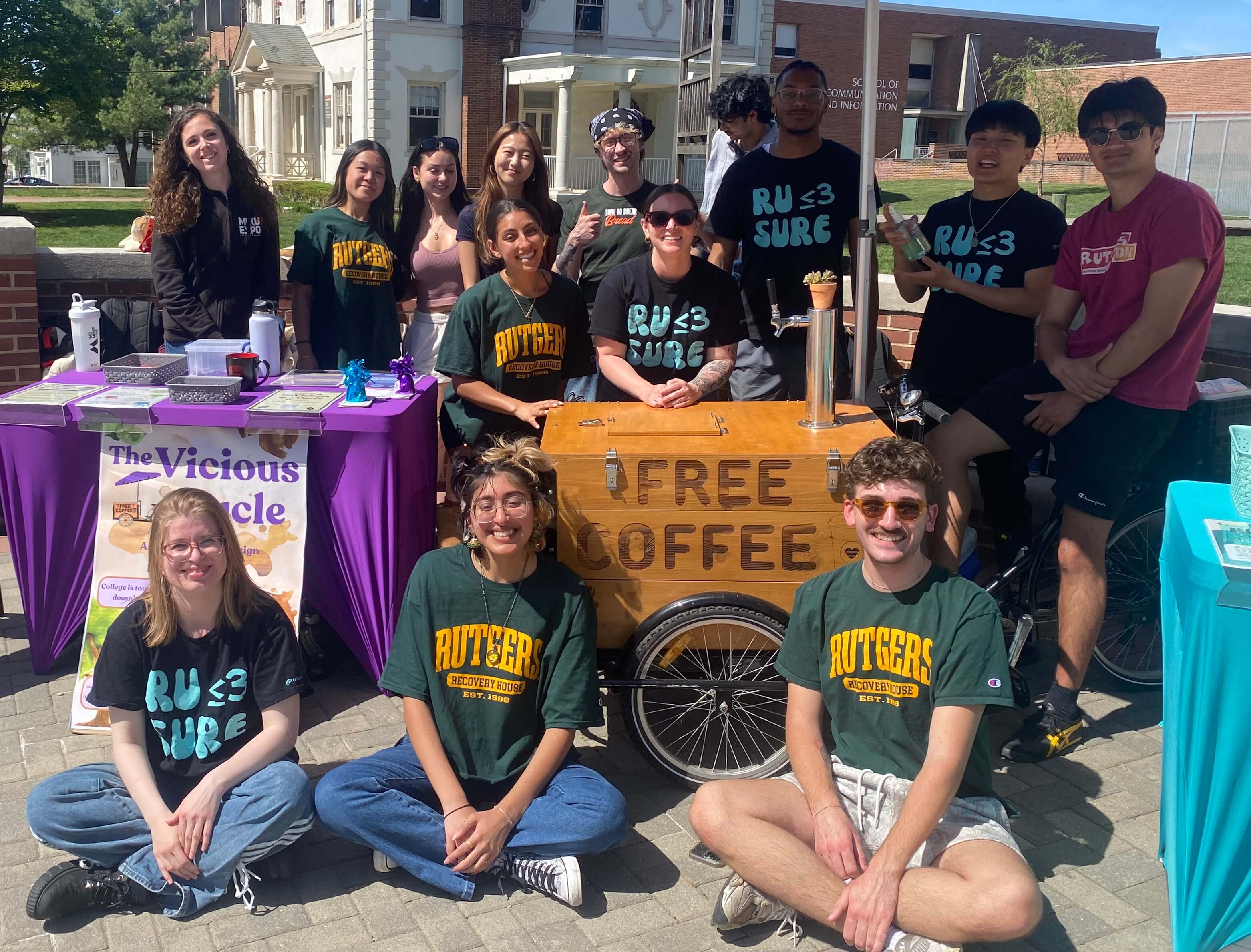
As Program Coordinator, I get to work with the students in my office, the classroom, and at events by actively talking to them about recovery, stigma, and substance use in a casual environment. Not only do I get the chance to connect with these students personally, but I can also witness them connecting and encouraging each other to discuss health and wellness, substance use, and supporting one another.
Once students take this course with us, they are welcome to earn Independent Study credit with CHI by working hands-on with the campaign. These are the students implementing the events, doing outreach, and creating social media messages to expand the reach of the campaign. I did this exact thing as a student. I can see myself in some of these students - when their hearts are warmed by sweet comments from attendees, when they are told they are doing wonderful work, when they open up about their own struggles, when they tell me they are taking a friend to an AA meeting, and when they recognize their own relationship with substances. I’m reminded every day that what I do matters, and I’m teaching the next generation the same thing; not just when I’m handing out coffee, but when I’m showing my own students why we do this.
When you give young adults a safe space to talk about heavy topics like addiction and recovery in a casual setting, you’d be surprised by the things they start feeling comfortable talking about. I realized this myself as a student. Learning that being more open about discussing alcohol and addiction made me realize where it was most prevalent in my life, with myself, friends, and family. We have to meet young adults and students where they are. We have to allow students to connect with topics like Collegiate Recovery and Narcan through creativity and using their own voice. The CHI method has been giving students a voice to speak to their peers for years. It’s not only my job, but I’ve made it my life’s purpose to promote this at Rutgers and in my own life.
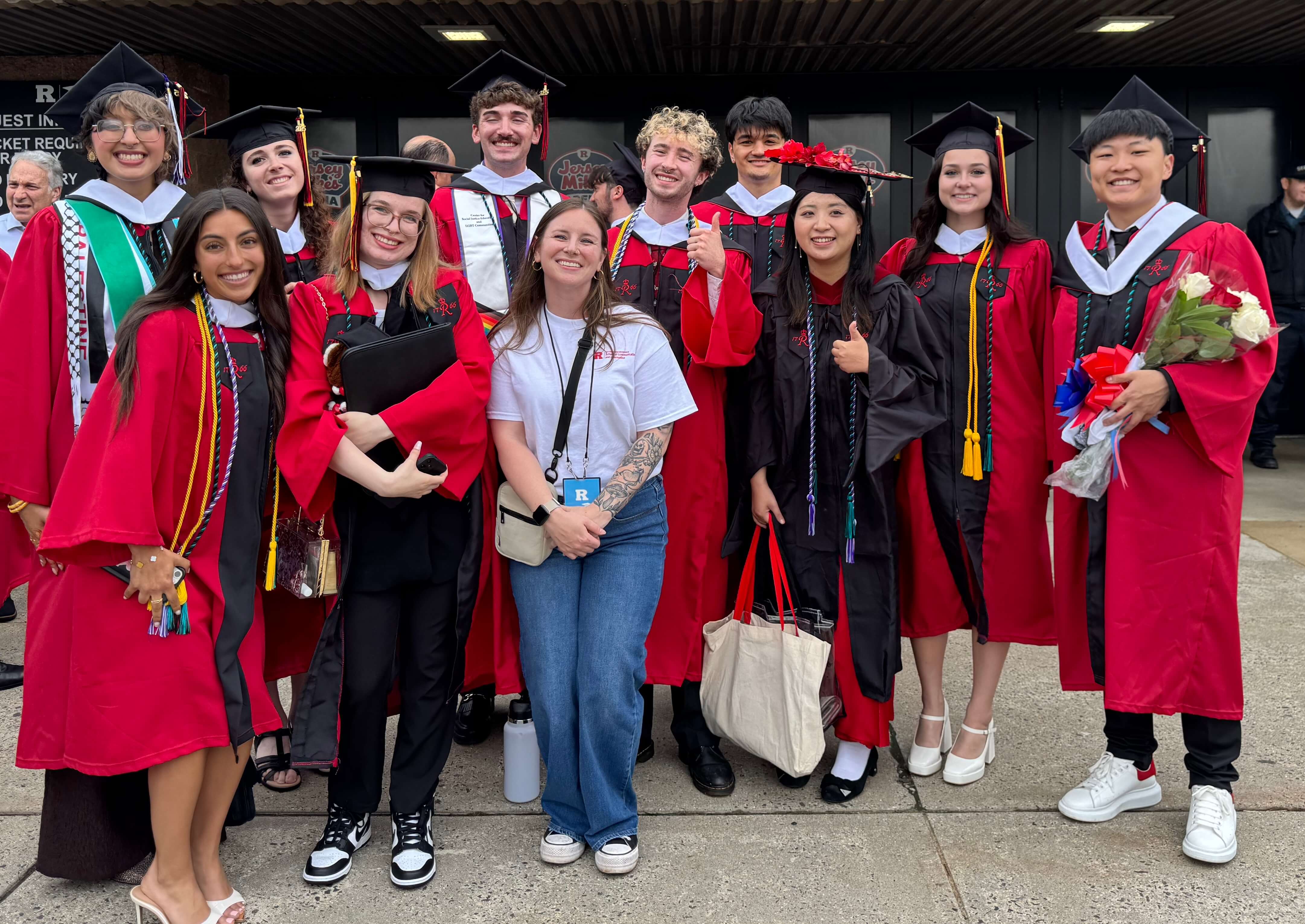
I have always loved being a student at Rutgers and beginning my career here, but this coffee bike has brought me more joy than I ever could have imagined. Thankfully, I get to pass this joy along to students in our classroom every semester. Although I don’t believe I was coffee in another life as Lorelai Gilmore does, I do believe I was, and will continue to be, a teacher and advocate for the things in life that truly matter.
Follow The Vicious Cycle’s journey on Instagram to see how we continue to brew change on campus: @theviciouscycle_ru
To learn more about the Rutgers-New Brunswick Alcohol and Other Drug Assistance Program, please visit: https://health.rutgers.edu/medical-and-counseling-services/counseling-services/alcohol-other-drug-assistance-program
To learn more about the Rutgers School of Communication and Information, please visit: https://comminfo.rutgers.edu/
Mobilize Recovery is coming to Rutgers University-New Brunswick on November 3rd, 2025!