Turning Haunting Into Healing
When my brother Marc died of a heroin overdose nearly seven years ago, I never imagined his story would lead me into advocacy. But love and grief have a way of reshaping our lives.

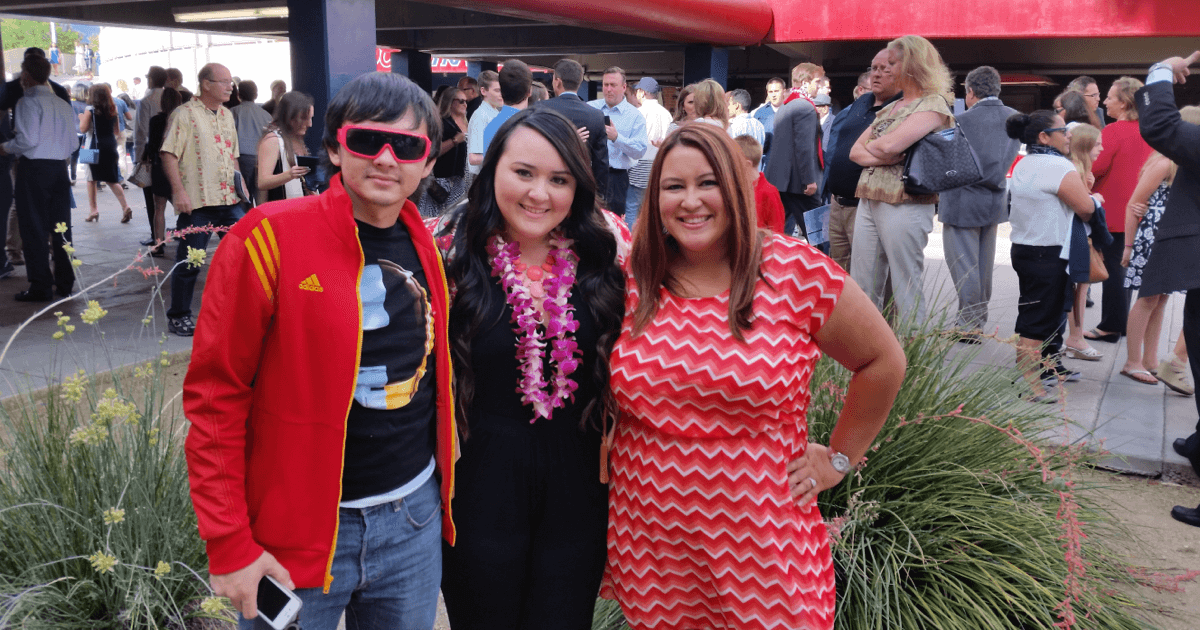
Top image: Marc, Alison, and I at Alison’s college graduation (where she graduated Summa Cum Laude cause the Kane children are undeniably intelligent)
I was asked to write a blog post and I enjoy writing and telling stories, so I thought this was gonna be so easy to complete. I even got to choose the topic and based on the timing of the blog, I chose to write about International Overdose Awareness Day.
I had it all planned out - talk about my brother, Marc. Talk about how this year will be the 7th year he has been gone. Talk about how I got into advocacy after his death and rattle off some statistics about overdose rates. Talk about the importance of advocacy and education. Maybe throw in some lessons of what I have learned in the last 7 years and end it with a really nice sentiment.
And then yesterday, I had lunch with my sister, Alison, and after some lobster enchiladas, a bumpy walk down memory lane, and crying in the middle of a Mexican restaurant, I decided to take this blog in a totally different direction. It’s the more uncomfortable direction, but if I have learned anything in the last almost 7 years, it’s that moving forward and evolving will always feel uncomfortable. I’ve done too much work to go back, so forward we go.
If you don’t know who I am, I am not surprised because I don’t expect anyone to know me. However, just so you don’t think I’m some random AI blog bot, here’s a CliffsNotes version of me: my name is Jaclyn and I am the Day of Service Liaison at Mobilize Recovery. I was previously the chair for the Mobilize Recovery Family Advisory Committee for a few years. I only came into the advocacy space in 2019 because on November 16, 2018, I lost Marc to a heroin overdose.
I never spoke about his struggles beyond my family and best friends. I never even looked into advocacy work while he was alive because it never even occurred to me that people actually spoke openly about this topic. However, I learned very quickly that people have zero problem speaking openly about it because I saw everyone else do it all over social media: except it was them talking about MY brother, just hours after he died.
“What happened?”
“How did he die?”
“When are they gonna say how it happened?”
“Was it another overdose?”
“We all deserve to know what happened.”
“Probably just another overdose.”
And the one that really got me: my brother’s senior picture with the caption “and another one bites the dust.”
One thing you should also know about me: I’m the eldest daughter and big sister. This means I am not gonna sit and allow others to create a narrative about my brother that focuses solely on his manner of death, so I chose to speak up. My first piece of advocacy and public speech ever: Marc’s eulogy. In front of 150+ people, I white knuckled the sides of a podium and told everyone about Marc. His life, his passions, his quirks, his desires, his humor - and the time I spent the least on was his manner of death. Why? Because that didn’t define who he was.
After that, it was impossible for me to keep my proverbial “everything is fine. it’s fine.” mask up anymore. Instead, I promised myself that I would embrace qualities of Marc I admired, especially his authenticity and candor. I used social media as my diary and talked about my struggle with grief and loss, along with word vomiting all the other things I was experiencing.
Why? Because it consumed me and it was my reality, but never a reality I had seen or heard of before first hand. I’m sure people hated that I was such a buzzkill, but I wasn’t sharing this for them: this was for me. I knew that some day, this HAD to get better. This feeling HAS to fade, right? So, in my ADHD brain, this will be the eventual “proof” that I once survived something so horrific.
Fast forward to now: if you’ve known me in the last seven years, I think you would agree: I’ve embraced authenticity and candor pretty well. I have really found a passion around providing relatable education about substance use and mental health. In my research, I learned of this thing called “harm reduction.” I loved the concept of it because it wasn’t motivated by punishment, but by unconditional love.
In 2020, I started doing street outreach for a local syringe service program. I was the Volunteer Coordinator and I helped open/run a site every Friday night. We had an amazing crew of med students and current nurses as volunteers to provide guidance with any health concerns our participants had. We would also bring food, water, clothing, shoes, toiletries, etc (many times, out of our own pockets) and we helped about 100 people every Friday. This is where I learned what a supportive community can truly look like and I learned so much from our participants.
I found that the best way you can reduce stigma is to talk more about it to make the topic less scary or taboo. And as a big sister, I am a natural when it comes to education because as soon as Marc was born, I was auto-enrolled in the “Ask Your Sister to Show You” program (commonly known as AYSTSY….only in this blog). It was a mandatory premier program I was volun-told to handle and eventually, Alison joined this program. I am still in charge of said program and have been since 1989.
In all seriousness though, facts and data are incredibly important in advocacy. Combine that with your personal story and you have a winning combo to really engage someone. Up until about 2 years ago, my story was “easy” to tell. Why? Because I was numb to everything and was totally dead inside. It’s something I have perfected throughout my life, thanks to CPTSD (Complex Post Traumatic Stress Disorder).
And to pull a page from the AYSTSY playbook, CPTSD is similar to PTSD except you have been impacted by multiple traumatic events throughout your life vs. a single event. Additionally, CPTSD comes with another set of symptoms and yet, it’s not recognized as a “real” diagnosis in the DSM. It is recognized by the WHO in the ICD-11, but that is not utilized in the US. So, in America, CPTSD isn’t a “real” diagnosis.
Well, despite my not real diagnosis, the amount of undiscussed trauma being held inside was very real and at a breaking point. My therapist at the time said I wouldn’t benefit from traditional talk therapy any further, so she recommended EMDR (Eye Movement Desensitization and Reprocessing). I won’t go into all the details of EMDR because this would then turn into a short graphic novel, but it’s highly recommended for people who have been diagnosed with PTSD and CPTSD.
Over the last 2 years, I have told my therapist about events and feelings that I have never spoken aloud to another person. The eldest daughter can be a BIG internalizer for problems and that’s what I have done my whole life. So, as we are slowly deconstructing this old version of myself, it has felt like I have been crumbling at times. I have had to pull back during certain points from socializing or even replying to texts because it was too overwhelming to sit with my newfound feelings AND be a sociable human.
And yesterday, at lunch with Alison, is when I was reminded of something I learned during one of my crumble periods, but never discussed because I was mid-crumble. This time though, instead of pushing it back in the closet, I hesitantly began to process it, mid-enchilada bite. OK enough back story, back to lunch.
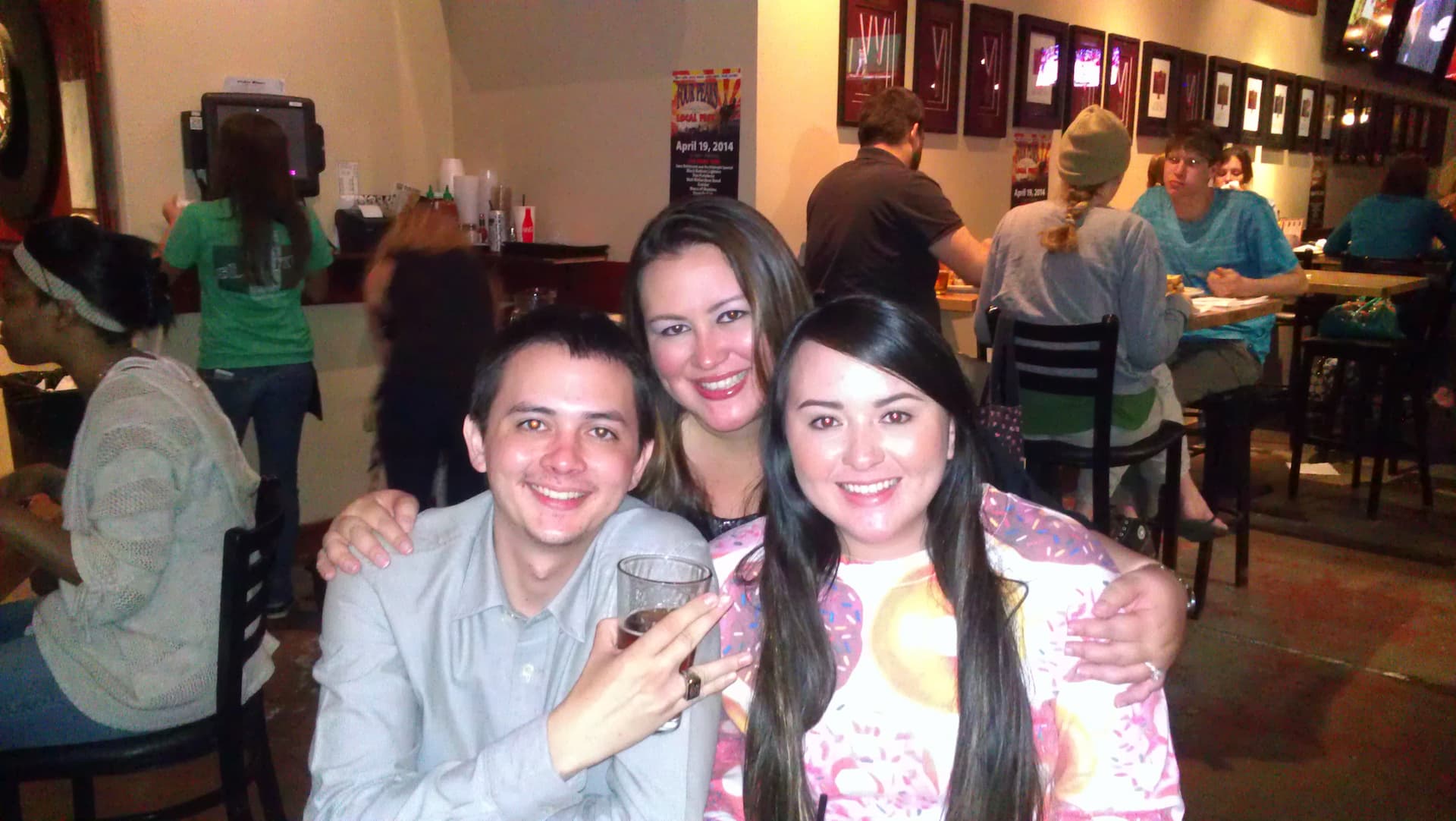
This was the first dinner we had together after I attempted to lead an “intervention”, which was 3 months prior to this. More on that later.
Alison and I were sharing random sibling hijinx stories from our childhood. Despite being close siblings, we obviously don’t know every sibling story because sometimes, only 2 out of 3 of us were there. So, as we are going back and forth, discussion about my work slips into the conversation and I’m now explaining what Suboxone does in the brain. Then the story I shoved away pops into my head and I just say aloud, “Did I ever tell you about what I learned about the day Marc died?”
At some point in the last few years, someone reached out to me about Marc, regarding the day he died. I know it was a friend of his, but I can’t remember who, but I know that this was a real story because my husband confirmed it. I had not thought about this interaction at all since it first happened, but educating her about Suboxone triggered it. I am not an AI blog bot and cannot remember every word I’ve ever said, but here’s the overview:
A friend of his told me that Marc reached out to them the morning that he died. He was checking to see if they had or knew anyone that had Suboxone because he was feeling the withdrawal and wanted some relief. From what I understand, he had not used heroin in a few weeks and Suboxone had helped him in previous attempts, but it was only prescribed to him at whatever point for a short period and then he didn’t have any more.
In case you haven’t picked up on this, he didn’t find any Suboxone….but he found heroin. And then my mom found him. And we found out that no matter how much you try to mentally prepare yourself for an outcome, you will NEVER be prepared for that phone call.
And as I’m trying to not ugly cry in the middle of the restaurant, I told her the realization that has haunted me since then: on the morning of his death, he was trying to find an alternative to heroin that previously worked for him. But because he didn’t have access or a prescription, he had to resort to heroin due to the withdrawal symptoms being bad (which he had done in the past). Except this time, because of the amount of benzos in his system as well, he overdosed and died. So, does that mean there’s a possibility that if he had found Suboxone or had easier or consistent access, he would still be here?
My rational and logical self knows that there is zero way to prove, know, or predict that the outcome that day would have been a better one if he had found Suboxone. However, I can almost predict with certainty that if he got the Suboxone he needed on November 16, 2018, I would have had him in my life for at least one more day. And in grief, where we bargain with the universe and ask for just 5 more minutes with our people, the time delulu makes one more day seem like 10 years.
Why didn’t he just go and get another prescription? Maybe it was pride. Maybe it was shame. I lean more towards shame because I distinctly remember him telling me that in rehab, he was told that Suboxone is only a “short term” solution and he would eventually need to get off of it to “truly be sober”. So, the idea of him admitting the “short term” solution didn’t work to an already judgemental doctor would be the last thing he would do because of his pride.
I have done a lot of research since Marc’s death and taken many courses related to substance use, the receptors, etc. And in all the research, it was never indicated that Suboxone is only a short term fix. In fact, it can be used for months, years, or indefinitely, but it is obviously dependent on the individual, as everyone’s body responds differently.
So, to pull it back to a bigger picture: how often do you think someone like Marc is told false information, due to stigma, to influence their decisions or beliefs? Or how often is the framework/treatment plan influenced more by the morals and beliefs of the provider vs. what is actually best for the patient? I don’t need any scientific data or studies to know that it’s pretty often and it’s RAMPANT in this world. Source: my eyeballs and ears every damn day.
Marc heard these Suboxone statements casually, from people working at the rehab, participants, or friends. Their beliefs weren’t based on actual science - simply their anecdotal evidence and observations. And yet, he adopted these things to be beliefs, which is no fault of his own. He was surrounded by pressure from people in his life, constantly on him about going to detox or rehab, and that unknowingly reinforced his beliefs.
And I was one of those people because I didn’t take the time to learn more. Frankly, I was too scared to learn more. When it comes to fight or flight, I chose option 3: freeze. I was frozen for most of my brother’s substance use because I was too afraid that one wrong move or suggestion could cause the whole Jenga tower to collapse. I made the mistake once of insisting our family does an intervention (because I watched the show Intervention and my stupid ass assumed it would also turn out that way). Since I just based my actions off of notes from a TV show vs. real expert and professional guidance, it was unsuccessful, more harmful, and one of the most traumatic experiences of my life.
In 2025, we are in a time where we have access to the most amount of information and education at our finger tips ever in recorded human history. And yet, in this same timeline, people are still creating their stigmatizing, polarizing beliefs based off of TV shows or news headlines that may have been influenced by anecdotal evidence and observations - not actual science.
Even with a wealth of knowledge at our fingertips, we are just so overwhelmed at times that we only want quick headlines or summaries. Sometimes it’s just a matter of who yells the loudest. If you made it this far, this was the opposite of a quick summary and I appreciate you for taking that extra time with me.
To show my gratitude and to save you more time, here’s a free list of my anecdotal evidence and observations from the last almost 7 years. And if it helps you to believe me more, pretend I’m yelling all of these with great conviction:
- There will ALWAYS be multiple pathways to recovery. There is no one size fits all approach, as evidenced by the various ways people have achieved recovery.
- You may not agree with or utilize a certain pathway to recovery because it didn’t work for you, but that doesn’t mean it’s any less valid than your pathway because it could work for someone else.
- Shame and blame have never helped someone to make lasting change, but support and encouragement sure as hell will.
- A punitive system does not foster genuine rehabilitation. Their rehabilitation motivation was based in fear and operating out of fear long term will never turn out well.
- Surviving family members and friends: we didn’t know what we didn’t know. We did the best we could with the info, energy, and patience we had at the time. I know it haunts us, but we can redirect the “haunting” into “healing” (don’t steal that - I just thought of it). Provide education and guidance to those people who are in the same spots we previously were.
- Never let anyone tell you how long is too long to grieve. Grief doesn’t have an expiration date because love doesn’t either. Grief is all the love you want to give your person, but you can’t. Don’t let anyone dictate your timetable.
- Harm reduction saves lives. It doesn’t “only facilitate illegal drug use and its attendant harm.” In fact, people are 5x more likely to enter treatment and 3x more likely to stop using drugs once they utilize harm reduction services. However, the goal of harm reduction isn’t abstinence - it’s safer use and reduced negative consequences. This means that it’s NOT black and white and it would be ideal for you to start seeing gray.
- People who use drugs deserve to live, just like everyone else. Just because they don’t live in the way you think they should live doesn’t mean they deserve any less life or love on this planet.
I could add more, but then you would be here forever. I hope you’re able to take something away from this.
I still can’t believe it’s been almost 7 years. I miss you every minute, Marc, but I know you’re still around.
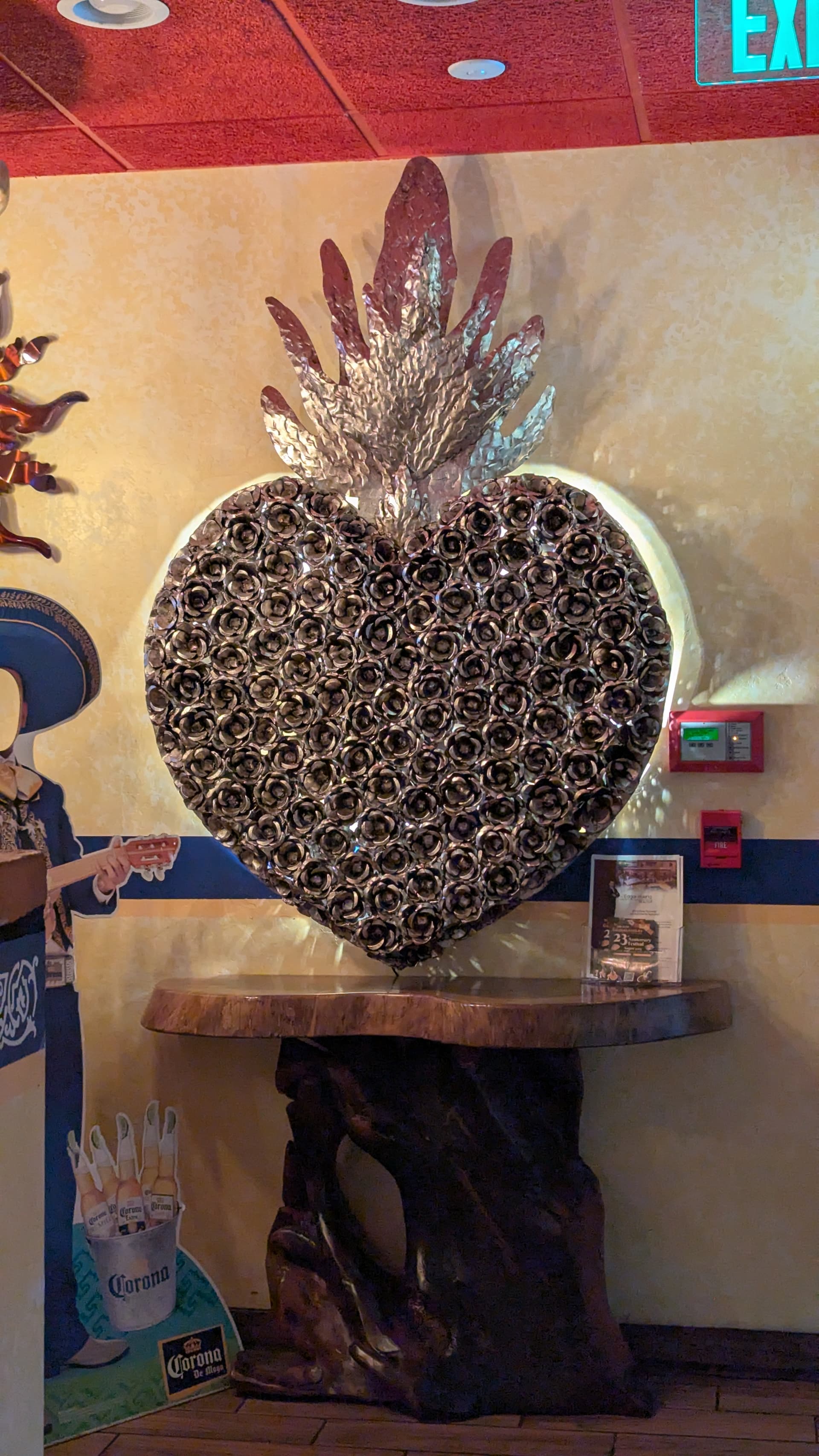
The number one sign that Marc gives me is a heart. Hearts show up unexpectedly and started a couple weeks after he passed. The place Alison and I went to lunch was a last minute decision and we had never been before. When we walked in, this was there to greet us. Signs are everywhere.
Did my story resonate with you?
I've started a personal fundraiser to support Mobilize Recovery and honor Marc’s memory. If my story resonated with you, please consider donating to Mobilize Recovery in his honor. Your gift helps turn haunting into healing.
Thanks in advance for your support.
— Jaclyn